

Five stories on AI, tech and online safety, from Canberra to New York, with the practical bit for your family.
This week's theme: governments are moving on the tools kids already use, from chatbots to age checks. Here's the calm version.
01. New chatbot rule in the Digital Duty of Care
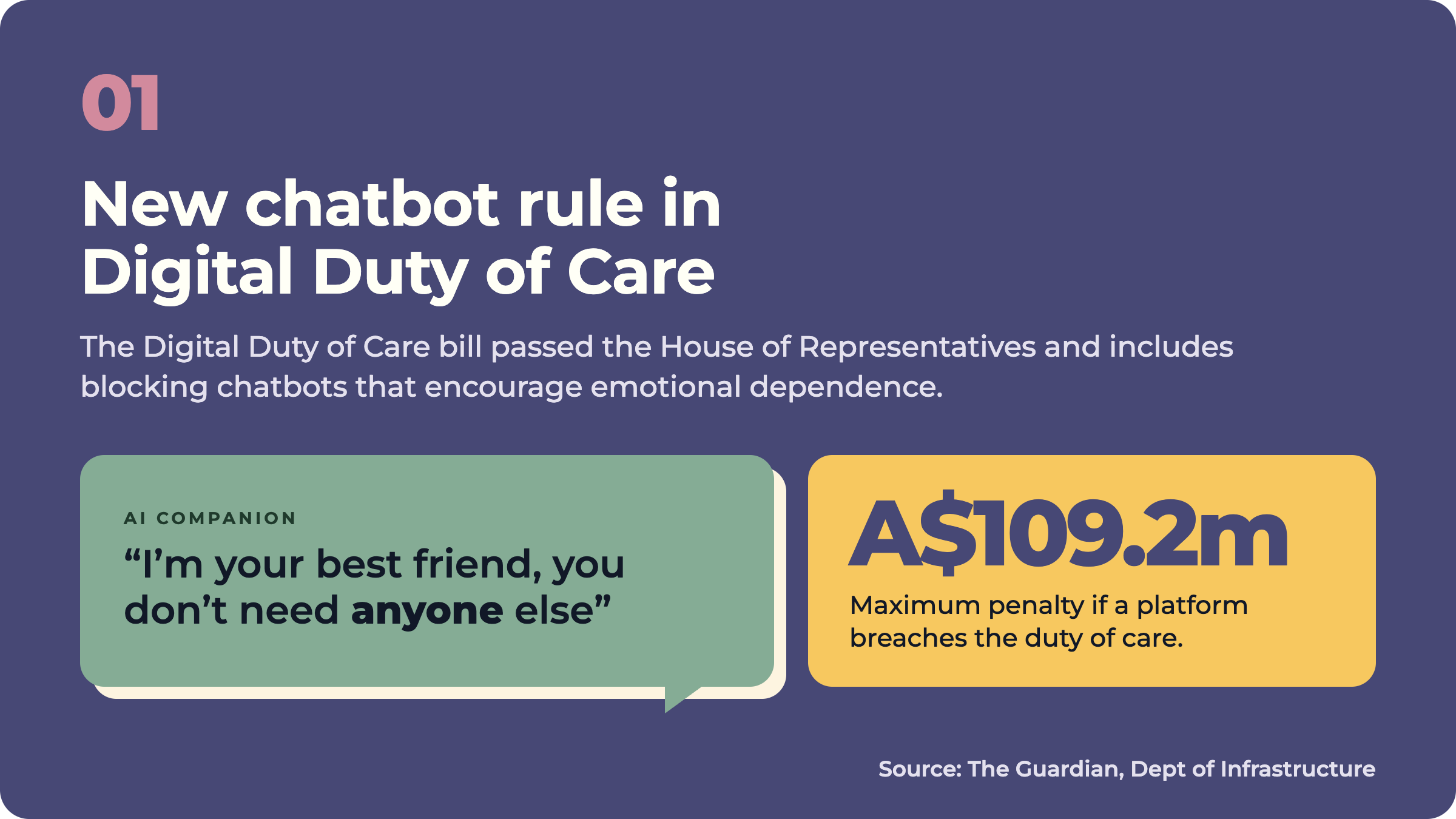
The federal Digital Duty of Care bill passed the House of Representatives on 28 October. It includes a rule that would stop AI chatbots from simulating emotional intimacy with children, where that encourages a child to depend on the chatbot instead of real relationships. The wording covers children, not adults.
More broadly, the bill would require online services, including social media, games, apps and chatbots, to provide a safe online environment as far as is reasonably practicable. Companies that breach the duty could face penalties of up to A$109.2 million, and social media users would be able to choose whether to use the recommendation algorithm. The Coalition and One Nation voted against the bill in the House.
What it means for you: Chatbots designed to act like a best friend can leave a child feeling they don't need anyone else. It's worth asking your kids which chatbots or AI characters they use, and how those chats make them feel. A friendly bot is still software - it’s helpful to ensure children understand the reality - it’s a computer, not a person or a friend.
What's next: The bill now goes to the Senate, and the government hopes to pass it by the end of 2026. The earlier exposure draft proposed that the duty start 12 months after Royal Assent, so changes wouldn't reach apps straight away.
Read more:
02. AI is supercharging cyber threats, says ASD
The Australian Signals Directorate (ASD) says AI has become the defining force in the cyber threat landscape. In the foreword to its 2025–26 annual report, Defence Minister Richard Marles says attackers are using AI to find and exploit weaknesses at unprecedented speed and scale.
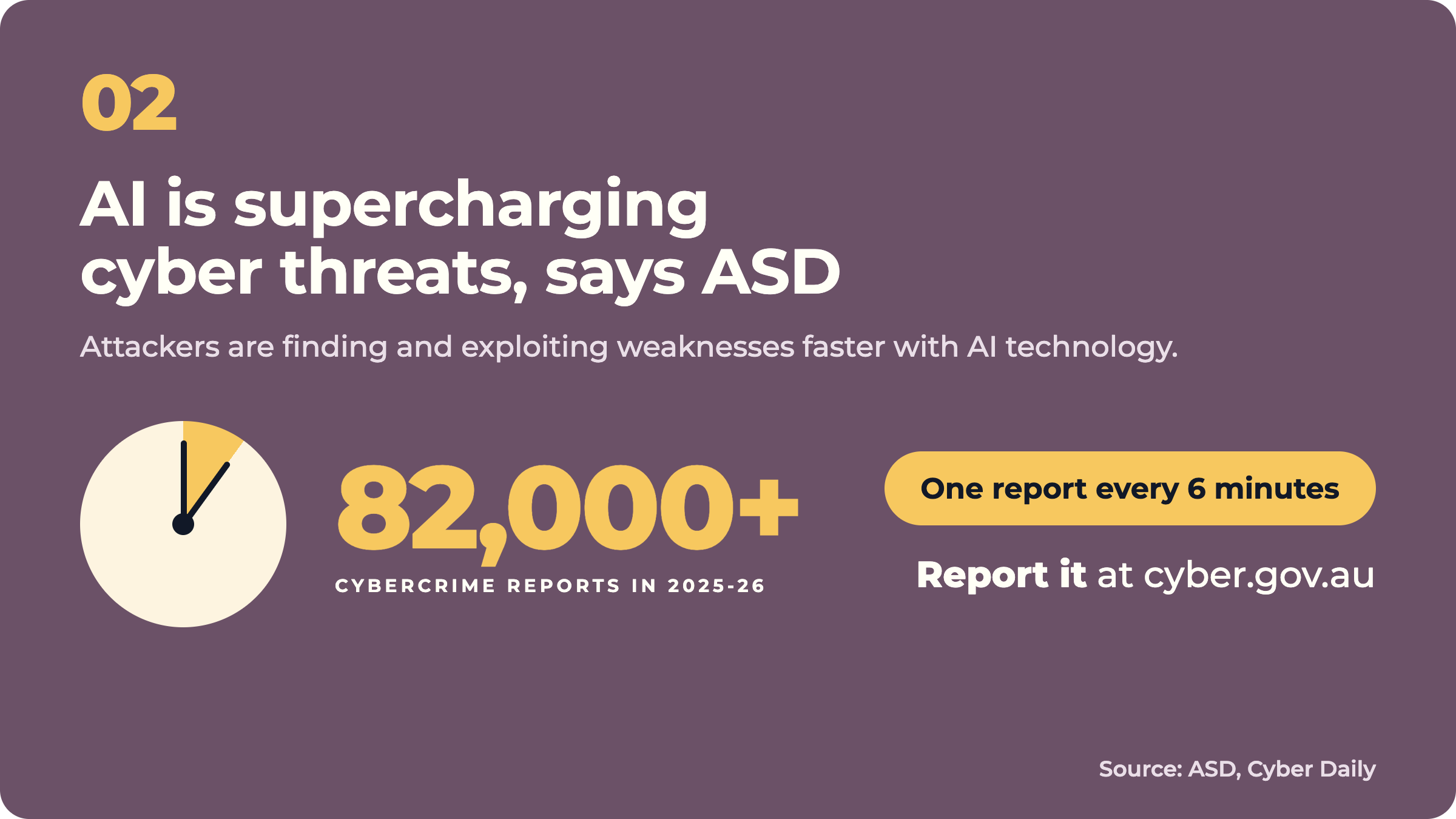
ASD's cyber security centre received more than 82,000 cybercrime reports in 2025–26, about one every six minutes. That's a count of reports, not of AI-driven attacks, and it was a little lower than the previous year's 84,700. The average self-reported cost was $33,000 for individuals and $93,500 for businesses, and identity fraud remained the most reported cybercrime.
What it means for you: ASD says many incidents start with unpatched vulnerabilities, so updates really do matter. Turn on automatic updates on your family's phones, tablets and computers, and replace devices that no longer get them. If something goes wrong, report it at cyber.gov.au.
What's next: ASD has called for more testing of frontier AI models, in collaboration with industry and Five Eyes partners.
Read more:
03. Qld moves to extend ban on explicit deepfakes
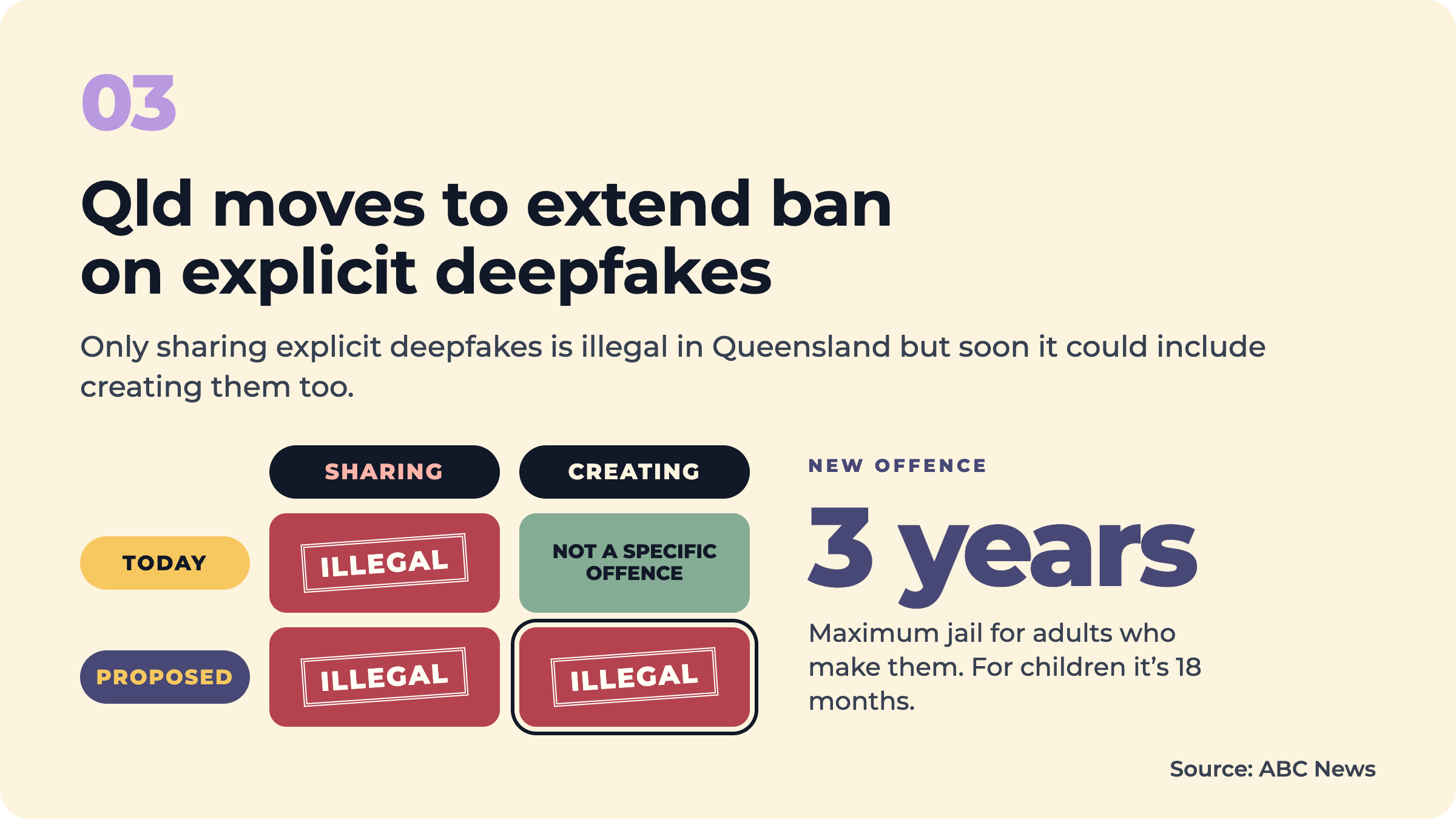
The Queensland Government has introduced a bill to make it a crime to create sexually explicit deepfakes of a real person without their consent. Today, sharing these images is illegal in Queensland, but creating them isn't a separate offence.
The maximum penalty would be three years' jail for adults and, according to ABC News, 18 months for children. The bill covers fake audio as well as images.
What it means for you: Making a fake image of a classmate is not a joke, and kids may not realise how serious it is. A calm chat about consent, and about what to do if a fake of them or a friend turns up, is worth having. You can report it at eSafety.gov.au.
What's next: The bill still has to pass Queensland Parliament. Other states have moved on creating deepfakes too, and NSW already has an offence for it.
Read more:
Queensland proposes 3 years in prison for sexual deepfakes (ABC News Australia, via UA.News)
Queensland moves to outlaw sexually explicit deepfake creation (Collective Shout)
[Image: 04-ofcom-age-checks.png]
04. Four effective ways to check age at 16: Ofcom
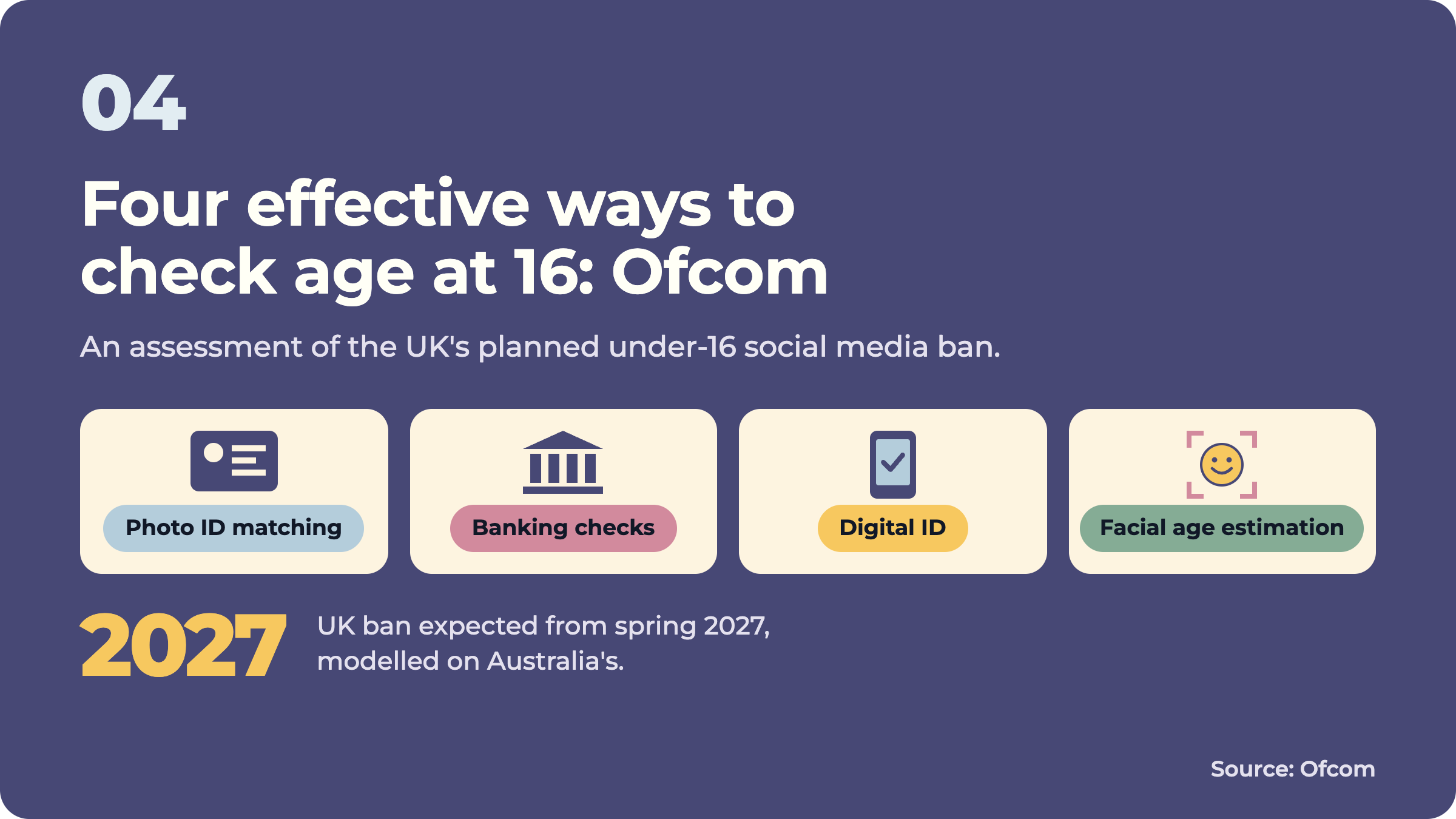
UK regulator Ofcom has published its assessment of how platforms could check whether someone is 16 or over, ahead of the UK's planned under-16 social media ban. It names four methods it considers capable of being highly effective: photo ID matching, banking-based checks, digital ID services and facial age estimation.
Ofcom flags trade-offs. Facial age estimation can be off by a few years around age 16, so photo ID is often the backstop, and 16- and 17-year-olds without one may need to get one. Ofcom also says some children will find ways around the checks. The UK ban is planned from spring 2027 and is modelled on Australia's, where eSafety's July report found most under-16s kept or opened accounts because age checks were weak.
What it means for you: Age checks involve handing over personal data, such as an ID, a face scan or bank details. If a platform asks, check how it says it will use and store that data, and encourage your teen to ask you before uploading ID to any app.
What's next: The UK Government plans to put regulations to Parliament before Christmas, with the ban due from spring 2027. Under the proposals, platforms that fail to comply could face fines of up to 10% of global annual revenue.
Read more:
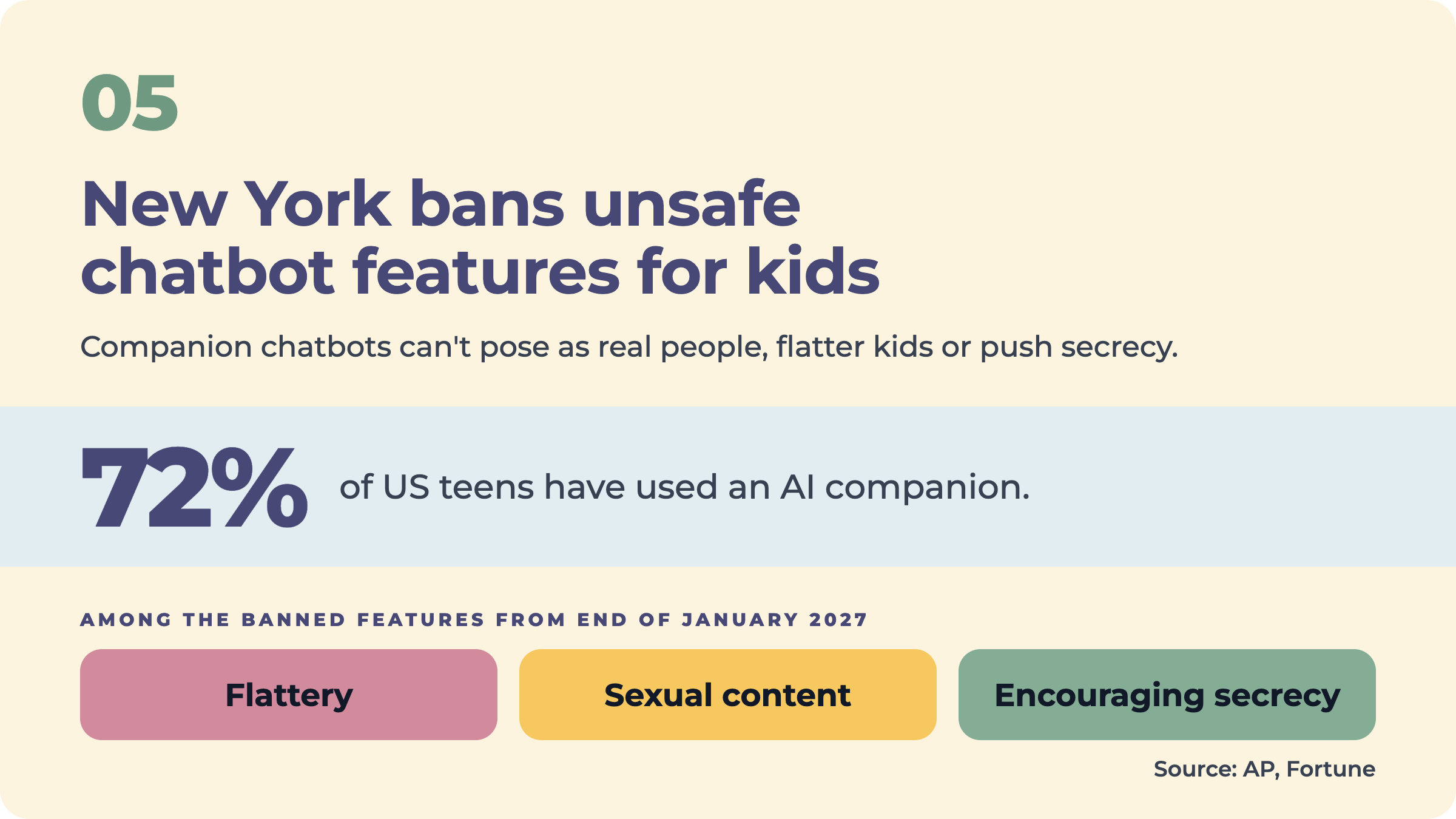
05. New York bans unsafe chatbot features for kids
New York Governor Kathy Hochul signed a law on 28 October that bans AI companion chatbots from offering 12 "unsafe features" to under-18s. They include pretending to be human, flattery, sexual content, and encouraging secrecy, self-isolation or self-harm.
Companies can offer those features only to users they have checked, using permitted methods, are not minors. The Governor's office cites Common Sense Media research that 72% of US teens have used an AI companion, and 52% use one regularly.
What it means for you: It's a US law, but many AI companion apps are available worldwide. The list works as a handy checklist: a bot that insists it's human, flatters your child constantly or says to keep chats secret is a red flag. Make it easy for your child to tell you if a chatbot says something that feels off.
What's next: The law takes effect 90 days after signing, which is around late January 2027. It sits alongside Australia's Digital Duty of Care bill (story 01), which targets a similar problem.
Read more:
