

Five stories on AI, tech and online safety, from Canberra to Victoria, with the practical bit for your family.
This week’s theme: the pressure on platforms is rising, and technology is still moving faster than the rules. Here’s the calm version.
01. Court action looms over the under-16 ban
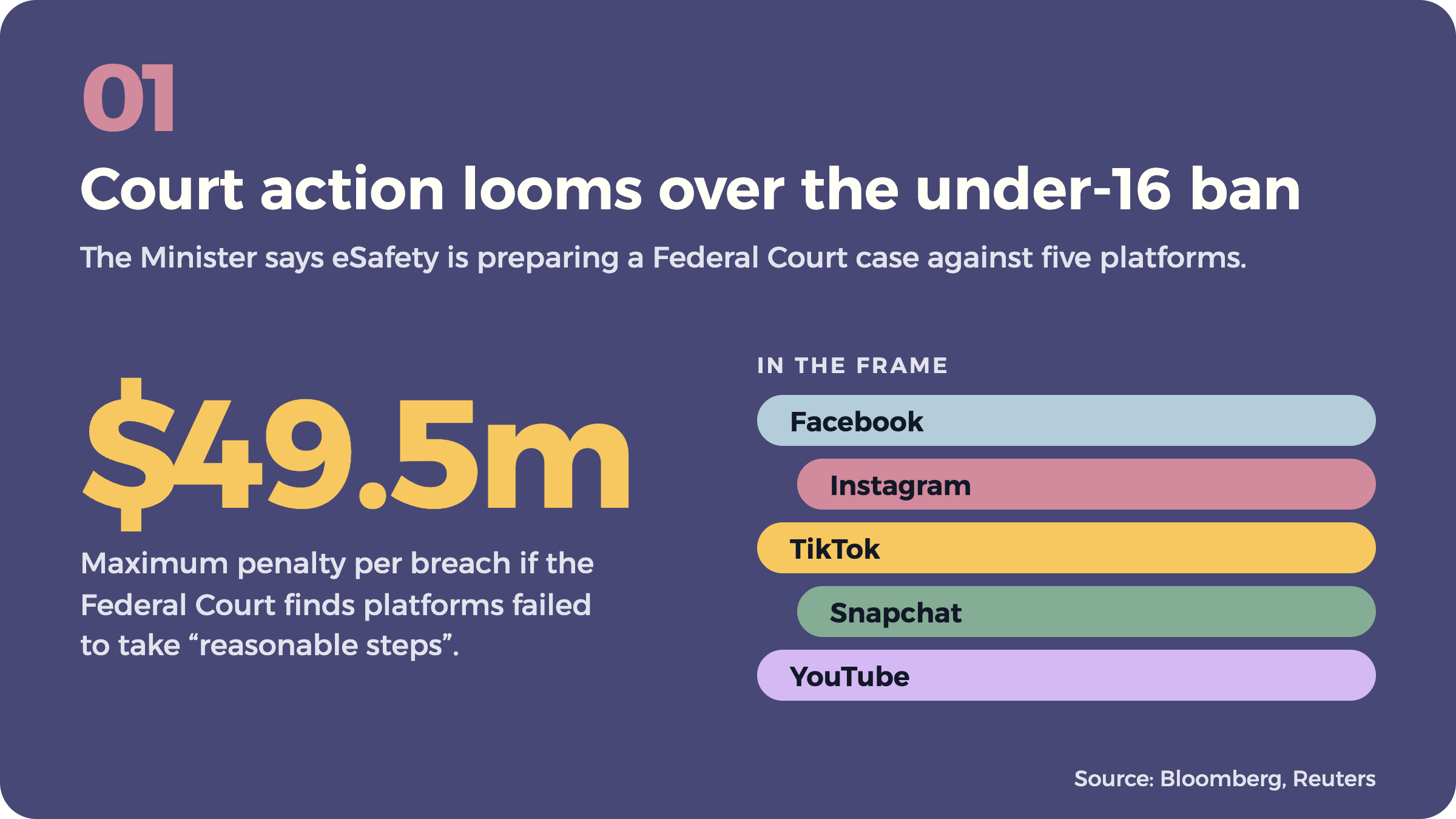
Communications Minister Anika Wells told Bloomberg that the eSafety Commissioner is preparing a Federal Court case over the under-16 social media ban. Five services are in the frame: Facebook, Instagram, TikTok, Snapchat and YouTube.
eSafety’s July report found most under-16s kept or opened accounts, largely because age checks were weak. In August, Meta said it had removed more than 750,000 accounts in Australia, and it says it is committed to complying. No case has been filed yet.
What it means for you: The law puts the responsibility on platforms, not on kids or parents. Even so, it helps to talk with your teen about why the rules exist, and about what’s on their phone.
What’s next: If the case is filed, the Federal Court will have to decide what “reasonable steps” actually means for platforms. Penalties of up to A$49.5 million per breach are possible.
Read more:
02. eSafety warns AI inquiry about deepfake apps
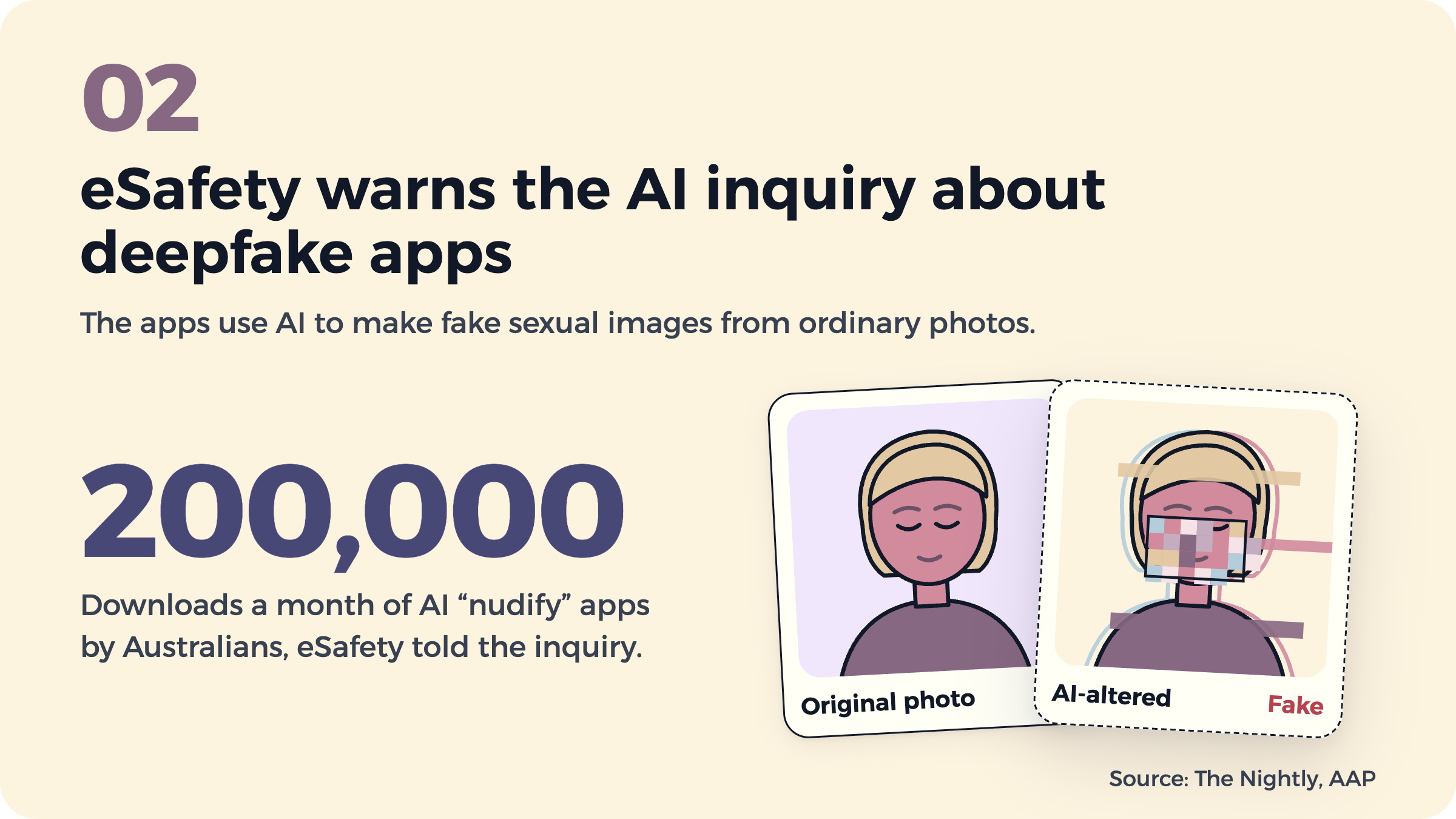
The eSafety Commissioner, Julie Inman Grant, told a parliamentary inquiry into AI that “nudify” apps are being downloaded about 200,000 times a month by Australians. These apps use AI to create fake sexual images from ordinary photos, and children have used them against classmates.
eSafety has taken enforcement action against eight such services, which have since withdrawn from Australia or added age limits. The gap is that eSafety may be unable to act on non-sexual fakes, like faked images of teachers, unless they meet a legal threshold.
What it means for you: Photos posted publicly can be misused, so it’s worth pausing before sharing images of your kids and finding out your school’s policy. If something goes wrong, you can report it at eSafety.gov.au.
What’s next: The inquiry reports by the end of November. eSafety will also explore extending its standards to AI chatbots under the proposed Digital Duty of Care laws.
Read more:
03. The AFP says online targeting of teens is speeding up
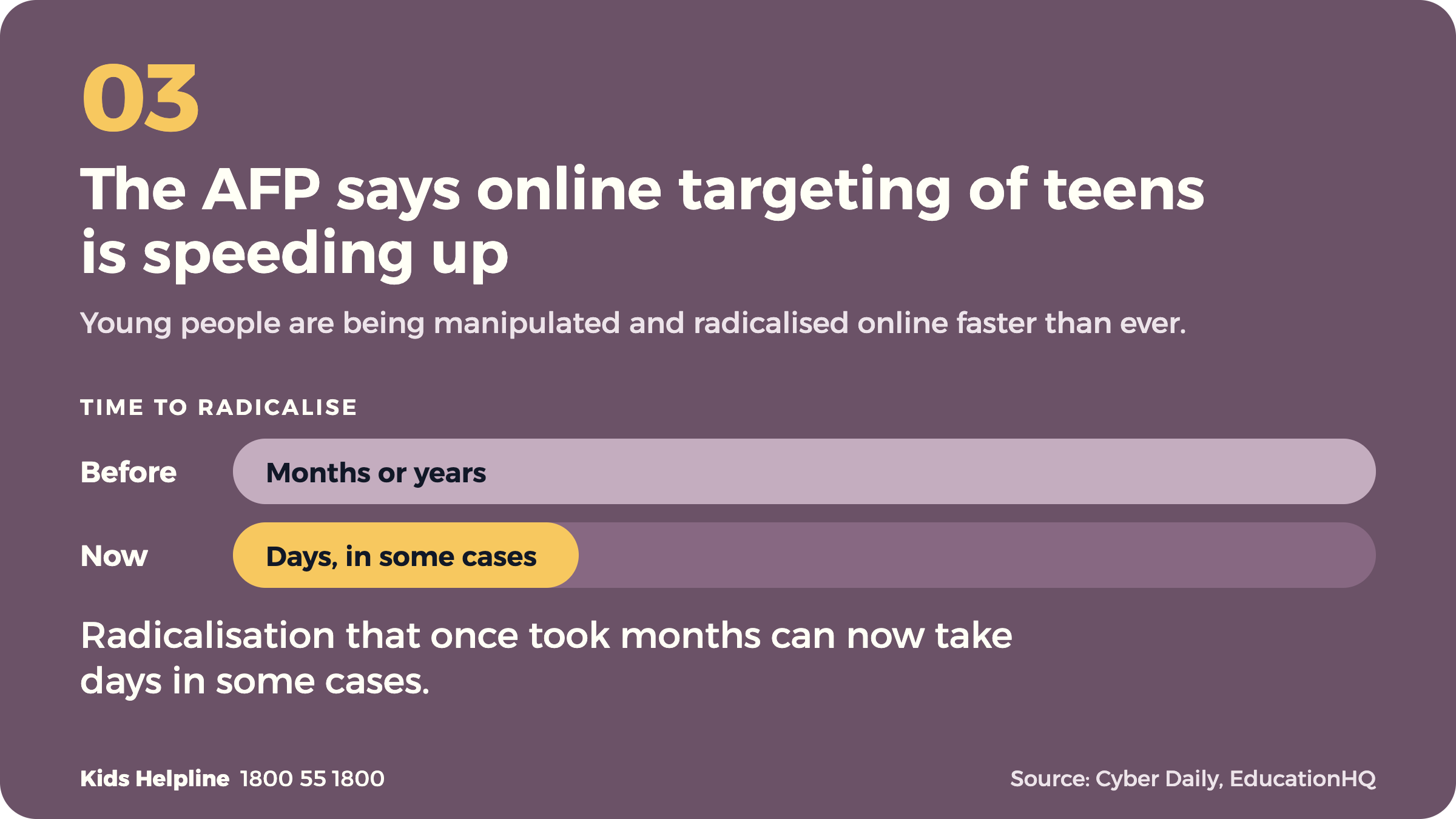
The Australian Federal Police told a parliamentary inquiry that young people are being manipulated and radicalised online faster than ever. What once took months or years can now happen in days in some cases.
The AFP points to AI, sophisticated online networks and young people searching for purpose and belonging. It also called for serious intervention on worsening youth mental health.
What it means for you: Strong connection is one of the best protections, so keep conversations open and calm, and notice any withdrawal or sudden change in mood.
If you or your child needs support: Kids Helpline is on 1800 55 1800 and Lifeline is on 13 11 14.
What’s next: The government has funded a new ASIO–AFP Counter Terrorism Online Centre ($74 million over two years, announced in May) to identify and disrupt online threats.
Read more:
04. AI-found flaws put PHP sites on pause for fixes
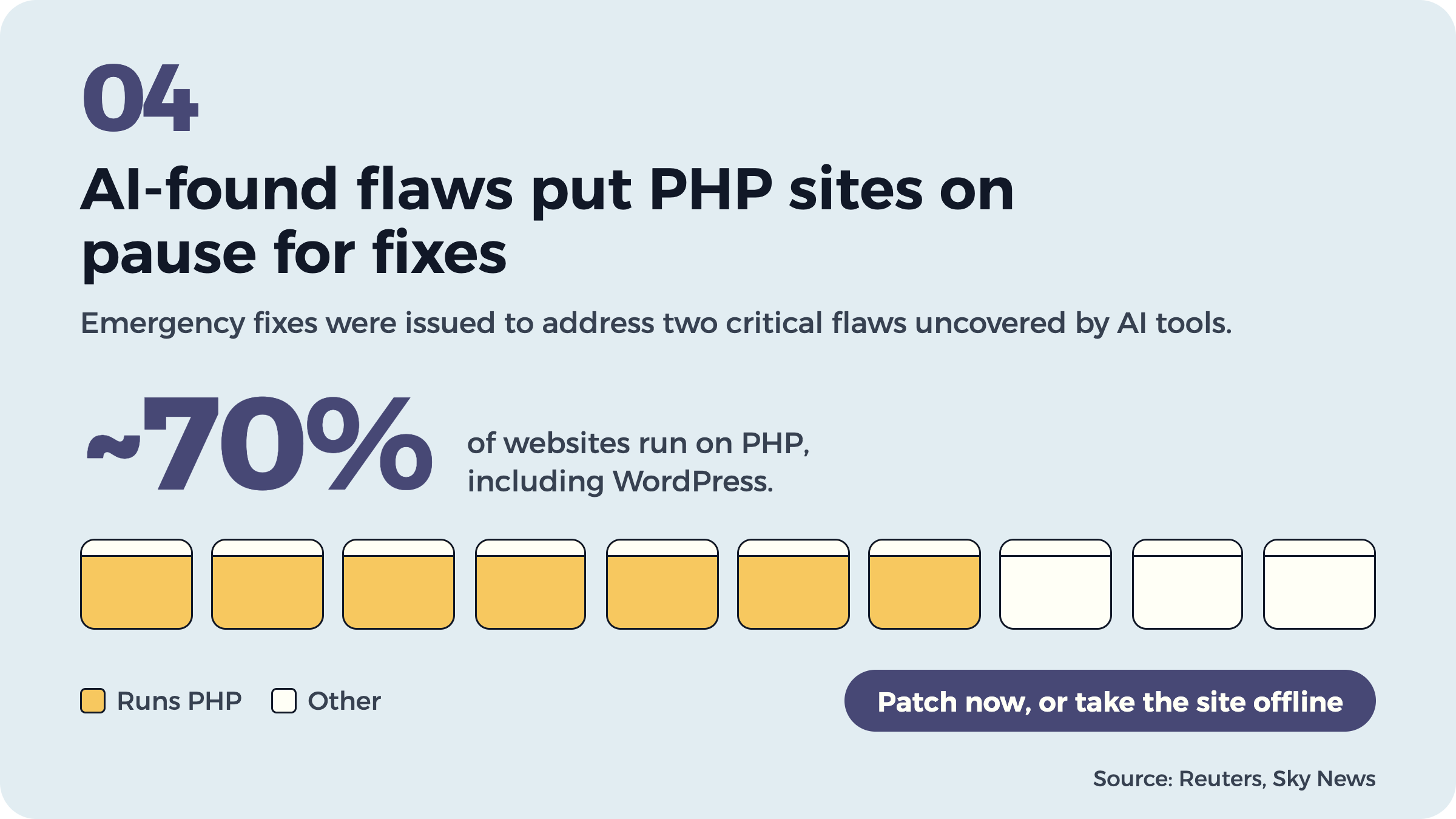
On Wednesday, the developers of PHP released emergency fixes for two critical security flaws. PHP is a programming language that runs roughly 70% of websites, including WordPress sites. Researchers found the flaws in August using AI tools, and details began circulating online a day before the fixes landed.
As a precaution, government websites across Europe went offline, along with some Wikipedia systems and, briefly, the Internet Archive. Cyber agencies in Australia, Europe, Japan and Britain urged people to update immediately or take sites offline until patched. Security firms saw attempts to exploit the flaws just before the fixes landed.
What it means for you: If you run a website for a P&C, club or small business, ask your host whether PHP has been patched, and keep WordPress and plugins up to date.
What’s next: Experts say AI can now find bugs that affect much of the internet, which makes patching quickly more important. The PHP Foundation says AI is helping surface more PHP vulnerabilities, with 15 new ones published since 1 July.
Read more:
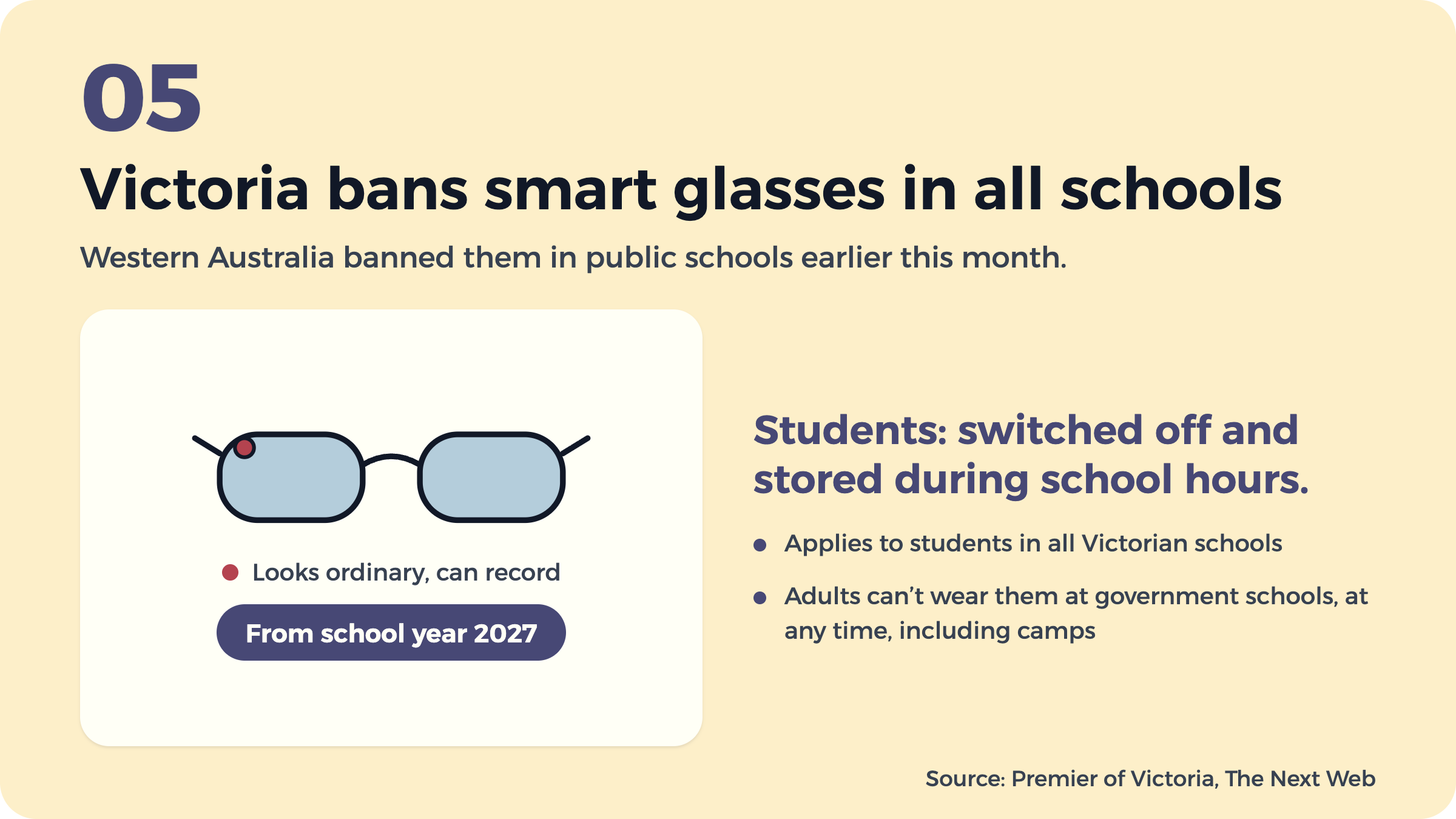
05. Victoria bans smart glasses in all schools
From the start of the 2027 school year, students in all Victorian schools, public, independent and Catholic, must have smart glasses switched off and stored during school hours and activities.
In government schools, the ban goes further for adults. Teachers, parents and volunteers can’t wear smart glasses on school grounds or on off-site activities like camps and excursions, at any time. Exemptions are only available as a reasonable adjustment for people with disability. Western Australia banned smart glasses in public schools earlier this month.
What it means for you: Smart glasses look like ordinary glasses but can record, so it’s worth a family chat about how to spot them and always asking before filming anyone else.
What’s next: The Victorian Government says that if it’s re-elected in November, it will extend the adult ban to non-government schools through legislation.
Read more:
